
The Northern Lights
In Russia’s far northern reaches, distance and isolation shape every decision. The roads are scarce and winters are relentless, making most of the landscape inaccessible for months at a time. Being able to access this wilderness was a privilege we relished in, but one that could become easily compromised if our only reliable way to operate in this environment was disrupted. For us, MI-8 helicopters were not optimal. Every movement, every commitment to a client, depended on them. When questions over the helicopter costs arose, they quickly became something far more serious than a disagreement over numbers. I was adamant that I needed to take charge, and if I knew there was someone I could rely on to fix this, it was myself.
I remember the winter of 2004 distinctively. By November, the cold season had already claimed the far north of Russia. Days grew shorter, darkness seemed to settle early over the Kola Peninsula, and tension followed quietly, almost as persistent as the cold.
Our Russian partner, Boris, had become adamant that the costs of MI-8 helicopters had suddenly risen since the previous season, and therefore our prices must increase sharply as well. Boris was a man with a booming voice and an unshakable belief that his word was law. Once his mind was fixed on a point, there was no untangling it. For weeks, we had been locked in the same argument.
“People will pay,” he told me repeatedly. “They always pay.”
He spoke with absolute confidence, certain our clients would accept whatever we demanded. He could not understand why I refused to concede. What Boris did not know, what I never mentioned on the phone, was that I had already checked. I was in regular contact with other operators across the Kola Peninsula who used the same helicopter company, and I now knew exactly what those helicopters cost. Boris was not only exaggerating, but he had also underestimated me. I decided to keep this information to myself.
Our phone calls grew increasingly hostile. Polite discussion vanished, replaced by raised voices and circular arguments. We were like two boxers in a ring, each unwilling to back down. I had had enough. There was only one way to resolve this.
I would have to go to Murmansk.
I flew via Moscow, watching the landscape fade into endless darkness. By the time we landed, it was close to midnight. The air outside was brutally cold, the kind that burns your lungs and sharpens every sound. If the plane hadn’t left me stiff, the cold finished the job. The last thing I wanted was a tense, even colder meeting with Boris.
He was not hard to spot, his confident, tense demeanour as evident in person as it had been on the phone. I approached him cautiously, keeping my eyes level with his. We shook hands. To this day, it remains one of the coldest handshakes I remember, not just because of the temperature. There was no smile, no small talk. Just two men who had spent weeks arguing, now facing each other, each trying to mask discomfort.
I climbed into the front seat of his car, and we drove off into the night in silence. The road out of Murmansk was narrow, dark, and unsettling. On either side, shadows revealed graveyards, row upon row, fading back into blackness. I wasn’t sure if he had chosen this route deliberately or if it was simply the way home. At one in the morning, in that frozen silence, it felt surreal and if his intent had been to unsettle me, it was working.
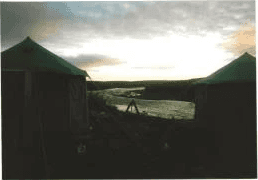
Neither of us spoke. I wanted to put on the radio and drown the tension, but I dared not. After a couple of miles, Boris slowed and pulled over into the shadows. I froze, staring into the darkness ahead.
“Get out,” he said.
My heart dropped. I hesitated. Alone on a deserted road, surrounded by darkness and graves, in a country I barely knew. Carefully, I opened the door, every sense alert, and stepped into the freezing air. Boris stepped out behind me. I didn’t know how to react, and before I could weigh my options, he raised his arm and pointed upward.
“Look,” he said.
I tilted my head back. The sky exploded with light.
It was the Northern Lights, alive, moving, stretching across the heavens, glowing green and white in vast, silent waves. They shimmered and twisted above us. For a long moment, neither of us spoke.
Standing there in the cold, mesmerised by the impossible sky, everything changed. The anger, suspicion, and weeks of arguing melted away. Whatever walls or differences had separated us quietly collapsed. The next day, our meeting was calm, civil, productive. We talked through the numbers and the reality without shouting or threats. It was as if we finally understood one another.
When I think back on that trip, it isn’t the prices or the negotiations that stay with me.
It’s a frozen road outside Murmansk, the silent gaze above, and, most of all, the Northern Lights
